1228 Renminbi RX

December 28, 2009, 12:16 pm

Renminbi RX
中国人民元(RMB = RenminBi 人民幣) RX = EP*/P
Dean Baker is right: it’s bizarre to report that Chinese officials are (a) worried about inflation and (b) determined not to let their currency appreciate without noting that these are contradictory policies.
このリンク先でのディーン・ベイカーの主張は、正しいよ。中国高官はインフレに怯えて、これらは矛盾した政策以外何物でもないのに人民元切り上げを実施しようとしない。


Consider the real exchange rate, defined as RX = EP*/P, where E is the exchange rate measured as the domestic currency price of foreign currency (so an appreciation of the renminbi is a fall in E), P* is the foreign price level, and P the domestic price level. Basic international macro says that there is a “natural” level of the real exchange rate, determined by trade competitiveness and international capital flows. And the economy “wants” to get to that real exchange rate.
為替レートを考慮すると、RX = EP*/Pと定義される。
Eは、国内通貨の海外通貨での価値(人民元の切り上げは、Eの下落になる)
P*は、外国の物価水準

Pは、国内の物価水準
基本的な国際マクロ経済学では、実質為替レートには、市場競争力や国際的な資本の流れによって、適切な水準がある。 経済は、実質為替レートに近づこうとする。

If you have a floating exchange rate, you get there via a rise or fall in E. But if you have a pegged rate, there’s pressure on prices instead. By deliberately keeping E higher than it would be under floating, China is creating pressures for P to rise; the inflationary pressures are directly related to the exchange rate policy.
変動為替相場を採用しているのであれば、E(国内通貨の海外通貨での価値)の上下によって価格が形成される。しかし、固定為替相場であるなら、故意にEを高くすることによって価格に圧力を与えることになる。中国では、P(国内の物価水準)が上がるのを抑えるために価格形成をしている。 つまり、インフレ圧力は、直接為替政策に関係している。


This isn’t a new story. The proximate cause of the breakup of Bretton Woods [actually not quite: it was the Smithsonian Agreement, the short-lived successor to Bretton Woods, that broke up and ushered in floating rates] was the fact that Germany, whose currency was pegged to the dollar, found itself facing inflationary pressures; the Germans solved that problem by letting the Deutsche mark float, and the rest is history.
過去にも事例がある。最も最近の例では、ブレトンウッズ体制の崩壊を引き起こしている。
(正確には、そうではない。崩壊したのは、ブレトンウッズの後継である短命であったスミソニアン協定であり、このことが、変動為替の先駆けとなった。)ドイツの通貨はドルに固定していた。そのことがインフレ圧力となっていることが分かっていた。 ドイツは、その問題は、ドイツマルクを変動制にすることで解決した。その後のことは周知の通り。

Oh, and right now Spain faces deflationary pressure because it can’t devalue, yet the economy wants a depreciated real exchange rate.
今まさにスペインがデフレ圧力に直面している。なぜなら、スペインは通貨の切り下げをできないが、経済は実質為替レートを下げることを求めている。
So China is basically trying to keep water from flowing downhill. And it really needs to stop.
したがって、中国は基本的に坂を流れる水を止めようとしている。 本当に止めるべきだ。

輸出大国である中国の人民元が、不当に低い水準にあることは、クルーグマンは昔からお怒り。

1228 Age of diminished expectations

December 28, 2009, 8:53 am

Age of diminished expectations
期待が減退した時代
“Economy poised for surge as most accurate economist see U.S.” reads the Bloomberg headline. So it’s a major disappointment to read what Bloomberg considers a “surge”: 3.5 percent growth in 2010.
ブルームバーグヘッドラインを読むと、ほとんどの緻密なエコノミスト達がアメリカを見て、経済が急回復する構えを見せていると。ブルームバーグが急回復と見なしているものは、2010年の3.5%の成長率なので、ほんとガッカリするよ。

Um, that’s really subpar for recoveries, let alone recoveries from deep slumps:
それじゃ、本当に景気回復と呼べる代物じゃないよ、長いスランプからちょっと回復しただけだよ。


Or put it this way: during the Clinton years — a 8-year stretch — the average rate of growth was 3.7 percent. Growth at the pace Dean Maki predicts should be enough to bring unemployment down — but not by much. And his prediction is “among the highest” among 58 economists.

もしくは、以下のようにも言うことができる。
クリントン時代の8期では、平均成長率は3.7%であった。 ディエン・マッキ(バークレーズ銀行)の予測する3.5%の成長率で、十分ではないが、失業を抑えることができると。ただ、彼の予測は58人のエコノミストの中だけの話。

I hope he’s right, although my money is still on the more downbeat views of the Goldman guys. Still, it’s amazing how we’ve defined economic success down.
彼の主張が正しいことを祈るよ。ただ、私の資金は、ゴールドマンサックスの主張である景気後退に賭けておくけど・・。けれども、自分たちで経済成長を低く定義し直すなんて、ありえないよ。

1227 The malleability of history

December 27, 2009, 5:54 pm

The malleability of history
歴史の可塑性(戻れないこと)

Via Atrios, Mary Matalin:
アトリオス、メアリー・マタリン(共和党のコンサルタント)によると

I was there. We inherited a recession from President Clinton and we inherited the most tragic attack on our own soil in our nation’s history. And President Bush dealt with it. And within a year of his presidency at this comparable time, unemployment was at 5 percent. And we were creating jobs.
 まだあの当時のままだ。我々は、クリントン大統領の不景気を引き継いでいる。国民国家の歴史において、もっとも悲劇的な病魔を引き継いでいる。 ブッシュ大統領は、それに対処した。そして、これに匹敵する時代において、その任期の1年以内に失業率は5パーセントになった。雇用を作り出したのだ。

Uh, leaving aside the question of who was president on 9/11/01,
ムムム・・ 2009/11/1のテロの時に、大統領であったという疑問を完全に無視している。

↓クルーグマンが用意したチャートでは、ブッシュはグレーの網掛けで911の戦争で、失業率が下がったと言いたいようです。


1227 Stimulus timing

December 27, 2009, 5:19 pm

Stimulus timing
経済刺激策のタイミング
One thing that often becomes clear when we talk about prospects for next year — which worry me — is that there’s a lot of confusion over the timing of stimulus impacts. Even well-informed people will say things like “we’ve only spent a quarter of the money, so let’s wait and see what happens.” Menzie Chinn tried to get at this confusion recently; here’s my take.
来年の見通しについて話す時に、ある1つのことがはっきりしている。私も心配していることで、経済刺激策のタイミングでの大混乱である。 情報通の人でさえ、”我々はすでに4分の1の資金を使ったので、どうなるか見守ろう”と言っている。メンジー・チン教授は、最近のこの混乱を解説しようとしていた。 これが、私の見解である。

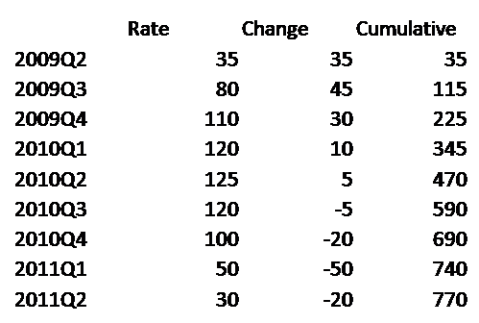
Let me work with a stylized numerical example. It doesn’t quite match the real stimulus — there’s no distinction between spending and tax cuts, and it tails off much faster than the real thing. But I think it’s close enough to make the point. Here’s the table:
図式化された数値データを使って説明させてくれ。実際の経済刺激策とは、全然一致していない。消費と減税との区分けがないので、実際の数値より早く切り捨ててしまっているからだ。ただ、これでも十分私の見解を主張することができる。以下がテーブルである。


In the table, “Rate” is the total stimulus spending within each quarter. “Change” is the change in stimulus spending from the previous quarter. And “Cumulative is the total spending to date.
“Rate”     その四半期の中での経済刺激策の総消費値。
“Change”    前四半期からの経済刺激策の消費量の変化値。
“Cumulative ”  総消費値。

Now think about three questions you might ask. The first is, how much higher is GDP this quarter than it would be without the stimulus? This should depend on “Rate” — on the quantity of goods and services the government is buying right now.
今、質問されるだろう3つのことが思い浮かぶ。
まず第1に、経済刺激策がなかったら、今四半期はGDPはどれほどだろうか?
これは政府が現在購入している商品とサービスの数値である、“Rate”から推測できる。


The second question is, how much faster is GDP growth this quarter than it would be without the stimulus? This should depend on “Change” — on the extent to which the government is buying more stuff than it did last quarter.
第2の質問は、経済刺激策がなかったら、今四半期のGDP成長率ははどれほどだろうか?
これは政府が前四半期に購入してから、今期購入しているモノの数値である、“Change”から推測できる。

Finally, you can ask, how much of the stimulus money has been spent? For that you want to look at “Cumulative”, and compare it with the final total for that column.
最後の質問は、経済刺激策はお金をどこまで使っているのか?
“Cumulative”をみれば分かる。 このコラムで、現時点の総額と最終総額を比較しておく。

Now the point is that “Rate”, in real life, follows an inverted U. The peak effect on the level of GDP comes at the top of the curve, but the peak effect on growth comes earlier, before the curve flattens out. In the table above, spending peaks in the second quarter of 2010, but the peak impact on growth is in the third quarter of 2009, i.e., it’s behind us. That’s true even though by the end of 2009 less than a third of the money has been spent.

実生活では、“Rate”(消費量)は、逆U字型になることが重要である。そのピークは、GDPがカーブの頂点に達する時期に影響するが、カーブが平らになる前に、そのGDP成長のピークは過ぎてしまった。上のテーブルでは、経済刺激策の消費ピークは、2010年第2四半期になっているが、そのGDP成長へのインパクトは、2009年の第3四半期である。つまり、もう過ぎてしまったということだ。
また、2009年第3四半期までに資金の3分の1は、使い果たしてしまったことも事実である。

And when the spending begins to tail off, the effect on growth turns negative.
経済刺激策が尽きたら、GDP成長への効果は後退するだろう。

What does this really look like? Menzie gives us the chart from Deutsche Bank, which is similar to other estimates, e.g. from Goldman Sachs:
このことを本当にどう思う? ドイツバンクのリサーチによるチャートでも指し示している。
同じような予測は、例えばゴールドマン・サックスなどでもしている。


You can see why I and many others are worried about the second half of next year.
なぜ、私も含め多くの人が来年の後半を心配しているか分かるでしょ。

1224 Noo Yawk Roolz!

December 24, 2009, 10:47 am

Noo Yawk Roolz!
ヌーヨーク最高!!(ニューヨーク訛り)
I watched the Senate vote this morning, and despite all, it was an inspiring moment. A few random thoughts:
今朝、上院投票を見ていた。 全てではないが、刺激的な瞬間だった。いくつか手当たりしだいの考えを並べた。

1. It’s petty and silly, but after what seems like a whole adult lifetime in which Central Casting insisted that major politicians be either Southern gentlemen or Midwestern heartland types, it felt good to watch and listen to Chuck Schumer, speaking the language of my roots, at the victory press conference — even with that green tie. Noo Yawk Roolz!
1.ちっぽけでバカげたことだが、セントラル・キャスティング(俳優学校)では、大物政治家役は南部紳士タイプか中西部ハートランド紳士のどちらか一方であると言われ続けた半生であった。
(つまり東部の東欧系ユダヤ人であることがイメージと合わないと)
そのチュック・シューマー上院議員が、私の故郷の言葉[であるニューヨーク訛り]で勝利宣言をする記者会見を目と耳で感じ取れたのは嬉しかった。ヌー・ヨーク最高!!ただ、あの緑のネクタイもどうかと思ったが・・・


2. More seriously, Jon Chait is right: this is a great achievement.
2.真面目な話をすると、Jon Chait は正しい。これは偉業である。


3. As expected, self-proclaimed centrists can’t bring themselves to say anything nice about a bill that delivers everything they claim to want. Many people have pointed to David Broder’s piece this morning; let me add a historical note. Back in 2006, Broder hailed the Massachusetts health reform as a “major policy success”. Now the Senate has passed a bill that is, broadly speaking, a better-funded version of the MA plan plus a major effort at cost control. Where’s the praise?
3.期待していたとおりに、自称セントリス達は、自分たちが希望した法案について何も世論の支持をえることができないでいる。今朝、多くの人がワシントン・ポストのベテラン・コラムニストDavid Broderの記事に指摘している。 歴史的な注釈を付けると、2006年にBroderは、マサチュセッツの医療法案を大成功として称賛していた。 
http://www.washingtonpost.com/wp-dyn/content/article/2006/11/25/AR2006112500736.html

たった今、上院が通過させた法案は、マサチュセッツの法案にコスト面でより優れているバージョンである。称賛じゃないのか? 

Anyway, a pretty good morning.
いずれにせよ、心地良い朝だ。

法案通過 クルーグマンおめでとう。

1224 Job prospects

December 24, 2009, 1:57 pm

Job prospects
雇用予想

Mark Thoma has a nice chart relating excess capacity in manufacturing to unemployment:
マーク・トーマスが、手工業の失業率における余剰能力のイカしたチャートを出している。


This offers a slightly different take on an issue I’ve been worrying about for a long time: recoveries don’t seem to be what they used to be.
このチャートは、私が長いこと心配していた問題を別の側面から言及している。つまり、景気が回復しても以前のようには戻らないだろうということだ。

Mark points out that in pre-90s recessions, rising capacity utilization — which coincides with the official end of the recession — was also marked by falling unemployment, right away. Since then, however, unemployment has seemed to follow the turnaround in capacity utilization only with a long lag.
マークは、90年代以前の不景気では、設備稼働率を上げることが、景気後退の終焉と一致しており、そのことが失業率の急激な回復にもなっていた。と指摘している。

Why the change? I argued in the piece above that it reflects, at least in part, a change in the nature of recessions. Here’s a somewhat better chart than the one I originally used:
違いは何でだ? 私は、少なくともある部分では、景気後退の性質の変化によるものだと主張していた。 私が利用していたものより、もっと優れたチャートがあった。


What this shows (you have to squint a bit) is that earlier recessions were preceded by sharp rises in interest rates, as the Fed tried to choke off inflation. This produced a housing slump, with a lot of pent-up demand; when the Fed decided that we had suffered enough, it relented, and both housing and the economy sprang back.
このチャートは、以前の景気後退は、Fedがインフレを抑えるような時に行う金利の急上昇により牽引されたことを示している。このことが、多くの繰延需要を抱えて、住宅販売不振を生み出した。
つまり、Fedが十分に耐えてと判断した時には、金利を緩めて、住宅と経済が回復した。


But later recessions took place in a low-inflation environment, in which booms died natural deaths from overextended credit and overbuilding. Getting the economy growing fast enough to bring unemployment down after these recessions was therefore much harder, since the usual channel of monetary policy — housing — lacked any pent-up demand.
しかし、今日の景気後退では、低インフレ環境に取って代わった。そのような低インフレでは、過剰な金融や建設の状況では、そのような急上昇は消え失せた。
通常の貨幣政策や住宅政策では、抑え込まれた需要の観点が欠けているため、景気後退が一層深刻になった後では、失業率が回復できるほどの経済成長が起きていた。 

So what about our current situation? It’s just like the two previous “postmodern” recessions, only more so, since the bubble before the slump was in housing itself. This suggests a long period of jobless growth; so does the international evidence on the aftermath of financial crises.
では、現状はどうだろうか?現状は、”近代以前”の景気後退というよりは、景気後退が住宅の問題だけであった以前のバブルに近いと言えるだろう。このことは、長期間の雇用を産み出せない経済成長であることを意味している。

That said, there’s been a lot of optimism out there lately, reflected in the steepening yield curve. I’d like to think that’s right. But Ed McKelvey at Goldman (no link) has a new report titled “Recovery more Ho-Hum than Ho-ho-ho”, in which he acknowledges that growth will be good this quarter, but presents evidence that it’s all a temporary inventory bounce.
最近、険しいイールドカーブを反映した楽観主義が蔓延っている。それが正しいことであって欲しい。しかし、ゴールドマンサックスのエド・マッケルヴィーは、”Recovery more Ho-Hum than Ho-ho-ho”という新しいレポートを出した。その中で、彼は経済成長は、四半期では良いと認識しているが、それは一時的な在庫処分であるという証拠を出している。

(補足)
エド氏は、今回の景気回復は、L字型になるだろうと予想している。クルーグマンも同じ。

We’re not out of this, by a long shot.
我々は、全然、この状況を脱していない。


1225 Talking about a Revolution

December 25, 2009, 11:08 am

Talking about a Revolution

1776: At 4 PM on Christmas Day — about the time I expect to be sitting down to dinner with the family — George Washington’s troops began their march to the Delaware River. That night, in appalling conditions, they would cross the river; the next day they would overwhelm the Hessians at Trenton.
1776年のクリスマスのPM4時、私なら家族とディナーを取りたい時間ではあるが、ジョージワシントンの部隊は、デラウェア川に進行し始めていた。その夜は、ひどい状況であった。部隊は川を渡り、次の日には、トレントンの戦いでヘッシアン一帯を制圧していた。

We don’t seem to do much celebration of the Revolution these days; I was dismayed to find that none of the TV stations I get even seems to be showing The Crossing, a corny but nonetheless gratifying dramatization of the events, with Joshua Lawrence Chamberlain Jeff Daniels as GW himself. But it was a great moment in American, and world, history.
我々アメリカ人は、最近、独立記念日を祝う気持ちになれないようだ。私は、以前TVで見ていたような古臭いが満足のいく再現ビデオを見ることがなくなったので、がっかりした。この出来事は、アメリカにとって、世界的にも歴史上、偉大な瞬間であった。


What’s not widely known, but is emphasized in David Hackett Fischer’s excellent book Washington’s Crossing, is the extent to which the citizens of New Jersey created the opportunity. It was the “Jersey rising” that led the British to scatter their forces, making it possible for Washington to descend on one isolated unit.
広くは知られていないが、David Hackett Fischerの名著「Washington’s Crossing」の中で、ニュージャーシーの市民がその機会を作ったと強調されている。大英帝国の軍隊を散らし、ワシントンがたった1つの部隊を襲撃することができた。これが、“Jersey rising”であった。

So let us celebrate the 233rd anniversary of Washington’s crossing, when the foundation of American independence — and, ultimately, of a largely democratic world — was laid. And let’s give special credit to the state whose people made it possible: New Jersey. You got a problem with that?
ワシントンの233回目の記念日を祝おう、アメリカ独立の基礎であり、突き詰めていくと、民主主義世界の礎が築かれた時であった。それを可能にした人々であるニュージャーシーに特別な称賛を与えよう。 その意味が分かった?

1222 A strange complacency

December 22, 2009, 10:58 am

A strange complacency
住宅価格への無頓着さ

Many people have written about this WaPo article on the Fed’s failure to foresee the crisis. I was particularly struck by the complacency over housing prices. I mean, there had just been an enormous increase in prices; the dotcom bubble was fresh in our memory; simple indicators like the price-rent ratio were flashing red. How could they have been so sure nothing was wrong?
多くの人がFed(連邦準備制度)の危機管理の失策に関するWaPoの記事について書いている。私は、特に住宅価格に対する無頓着さ驚いた。つまり、住宅価格の高騰が起きていたからだ。ITバブルは、我々の記憶に鮮明に残っており、price-rent ratio(住宅価格と賃貸価格の比率)のような指数は真っ赤であった。住宅価格の高騰に関して、彼らは何も問題ないと思っていたのだろうか。

And I was particularly struck by this part:
私は、以下の章に特に衝撃を受けた。

In January 2005, National City’s chief economist had delivered a prescient warning to the Fed’s board of governors: An increasingly overvalued housing market posed a threat to the broader economy, not to mention his own bank and others deeply involved in writing mortgages.
2005年1月にNational City銀行のチーフエコノミストはFRBに予知警告を出していた。それは、住宅市場のますますのバブルは、自身の銀行だけでなく、[住宅]抵当融資に深く関わっている他の銀行を含め、広範囲の経済に脅威を突きつけている。

(補足)
FRB〔Federal Reserve Board, Board of Governors of the Federal Reserve System〕全米に一二ある連邦準備銀行を統括し、連邦準備券の発行や公定歩合の変更などを行う機関。

The message wasn’t well received. One board member expressed particular skepticism — Ben Bernanke.
その警告は、十分に受け取られなかった。 委員会メンバの1人であるバーナンキは、格別に懐疑的態度を示した。

“Where do you think it will be the worst?” Bernanke asked, according to people who attended the meeting, one in a series of sessions the Fed holds with economists.
”それの何が悪いと思うんだ?”経済学者とFedが催しているあるう会議にて、その会議出席者に対してバーナンキは尋ねた

“I would have to say California,” said the economist, Richard Dekaser.
”カリフォルニアについて言及しなければいけない”と経済学者のリチャード・デカサーは言った。


“They have been saying that about California since I bought my first house in 1979,” Bernanke replied.
”1979年に私がカリフォルニアに最初の家を買って以来、ずっと経済学者どもは、そういい続けている。 バーバンキは、答えた。
This time the warnings were correct …
今回、その警告は正しかった・・・


Believe it or not, the Post is being too kind to Bernanke here, by implicitly asserting that past warnings about California housing bubbles had proved wrong. Um, no. Here’s a quick and dirty chart of Los Angeles metro housing prices, adjusted for inflation, between 1980 and 2000 (I’m using FHFA numbers and national PCE; you could do a more careful version, but I’m sure it wouldn’t make much difference):
信じるか信じないにしろ、暗黙のうちに、カリフォルニアの住宅バブルに関する過去の警告が過ちを証明しているのに、ここでのワシントンポストは、バーナンキに対して甘すぎないか。あり得ない・・
1980年から2000年にかけて、インフレ率に連動させたロサンゼルス首都圏の住宅価格の激しくおぞましいチャートがこれだ。
The point is that there was indeed a huge CA bubble in the 80s, which burst painfully. Nor was this an obscure bit of knowledge: in fact, people like Calculated Risk and yours truly were quite explicitly using the great California bubble of the 80s as a model for what was going to happen nationally.
重要なことは、80年代に巨大なカリフォルニアのバブルが事実としてあったことで、それは痛々しく破裂した。また、このことは、ほとんど認識されていなかったことである。事実、 Calculated Risk の購読者や小生も80年代のカルフォルニアのバブル通じて、全国的に起こりえるものとして認識した。

This whole episode makes me think considerably worse of my former department head.
この逸話によって、私は前職の部門長がどれほど無能かを思い知らされた。もちろん、バーナンキです。

今回の記事は、浮上しているバーナンキ再任論に対する牽制でしょう・・

1220 The WYSIWYG president

December 20, 2009, 6:02 pm

The WYSIWYG president
ウィズウィグ 大統領 
「What You See Is What You Get」(見たままの結果が得られる)
There’s a lot of dismay/rage on the left over Obama, a number of cries that he isn’t the man progressives thought they were voting for.
オバマ大統領の左派には、落胆/憤怒が出ている。多くの人が、自分たちが賛成票を投じていた改革を進めるような人物ではないと嘆いている。


But that says more about the complainers than it does about Obama himself. If you actually paid attention to the substance of what he was saying during the primary, you realized that
しかし、この事実はオバマ大統領自身に対してより、不平者に対して多くを物語っている。大統領が任期中に発言したことのおおよそに注意を払っていたのなら、以下のことを理解していたはずだ。

(a) There wasn’t a lot of difference among the major Democratic contenders
有力な民主党候補者に大きな違いはなかった。
(b) To the extent that there was a difference, Obama was the least progressive
民衆党内では違いがあったことを説明するためで、オバマは改革派の度合いが少なかった

Now it’s true that many progressives were ardent Obama supporters, with their ardency mixed in with a fair bit of demonization of Hillary Clinton. And maybe they were right — but not on policy grounds. (I still remember people angrily telling me that if Hillary got in, she’d fill her economics team with Rubinites).
現在、多くの改革派が熱烈なオバマ支持者であることは事実である。彼らの熱烈ぶりは、かなりヒラリー・クリントンの悪魔が混ざっているけど・・。恐らく、政策の観点からではないけど彼らは右派(改革派)であった。 私は、未だに、ヒラリーが大統領になったら彼女は経済チームをルービン達で固めるよと怒りに満ちて説明していたことを記憶している。

(補足)
オバマ・チームの中枢は、クリントン政権発足時の国家経済会議(NEC)議長、財務長官を歴任したロバート・ルービン氏(シティ・グループの経営執行委員会委員長)の旧部下が占める。

So what you’re getting is what you should have seen.
だから、見たままの結果が得られていると。

And exactly what should we blame Obama for? Here’s how I see it.
まさに我々がオバマ大統領のせいにしていることは何なのか? 私は以下のように考えている。

I still believe that Obama could have gotten a bigger stimulus. Yes, he needed some Senate “centrists”, but my read is that they were determined to take a slice off whatever he proposed — so he could have proposed more and gotten more. It was very different from health care, where it was really about policy rather than essentially arbitrary numbers.
私は、未だにオバマ大統領がより大きな経済刺激策を講じることができたのにと思っている。
大統領には、”中道派”の上院議員を取り込む必要があった。私の読みでは、連中は大統領が何を提案しようとも細切れでしか支持しない決心をしていた。だから、より多くの提案をして、より多くの支持を得た。 ただ、医療問題に関してはそういった提案とは違った。本質的には根拠のない数字ではなく政策だった。


Obama could definitely have taken a harder line with banks.
オバマ大統領は、銀行にもっと厳しい姿勢を取るべきだった。
Obama could also have done a lot more to change the discourse — less hope and change and let’s end the partisan bickering, more conservatives have the wrong ideas and we need to undo the damage.
希望も変化もないので民主党内での論争を終え、保守派は、もっと間違った考えであり、我々はダメージを消す必要がある。とオバマ大統領は、講演内容を変えることもできた。

But on health care, I don’t see how he could have gotten much more. How could he have made Joe Lieberman less, um, Liebermanish? And I have to say that much as I disagree with Ben Nelson about many things, he has seemed refreshingly honest, at least in the final stages, about what he will and won’t accept. Meanwhile the fact is that Republicans have formed a solid bloc of opposition to Obama’s ability to do, well, anything.
しかし、医療問題において、私は大統領がさらにどうするべきだったか分からない。いかにジョー・リーバマンに何もさせないか・・リーバマン派達にね。
付け加えなければいけないのは、私は多くのことに関してベン・ネルソン上院議員には同意できない、彼は、少なくとも最終的には自分の意思に正直者のようだが、私は同意できない。というのは、共和党員がオバマの実行能力に反対の派閥を形成している事実がある。


Some of my commenters have argued that even with this bill Democrats may well lose seats next year — possibly even more than they would have without it. Definitely on the first point; on the second, I don’t think people realize just how damaging it would be if Obama didn’t get any major reforms passed. But in any case, that misses the point. The reason to pass reform, even inadequate reform, now isn’t to gain seats next year; it is to pass reform, which will do vast good, during the window that’s available. If it doesn’t pass now, it will probably be many nears before the next chance.
このブログの投稿者には、この法案では、来年にも民主党が議席を失うかもしれないと主張している人もいる。もしかしたら、この法案を通さないでも議席は失うかもしれないが・・。
まず第一、二に、人々がしっかりとオバマ大統領が大改革を実施しなかった時に起こりえる損失を理解しているとは思えない。しかし、いかなる場合でも、この指摘は見逃されている。不十分な改革案であっても、その改革案を通すための理由は、来年に議席を取るためのものではない。
改革案を通すことは、窓が開いている間なら非常に有効である。現在、法案が通らないなら、次のチャンスは当分ないだろう。

 But back to Obama: the important thing to bear in mind is that this isn’t about him; and, equally important, it isn’t about you. If you’ve fallen out of love with a politician, well, so what? You should just keep working for the things you believe in.
オバマ大統領の話に戻すと。心にとどめるべき重要なことは、大統領に関してではない。同じく、不平を言っている人に関することでもない。政治家と恋に落ちたら、あなたならどうする?信念に沿って動き続けるべきだ。

1216 Minimum wages — a few clarifications

December 16, 2009, 6:06 pm

Minimum wages — a few clarifications
最低賃金 ちょっとした説明
Some of the commenters on my earlier post have raised question about the analysis. Just a quick response to three of the most common:
私の先日のエントリーに対して何人かの読者は、その分析に疑問を上げている。もっとも多かったコメントに即答しておく。

1. Why did I go from minimum wages to overall wages? Clearly, a cut in minimum wages –which only apply to some workers — can raise the employment of those workers at the expense of other workers. But the advocates of a cut are claiming that they can raise overall employment. The only way that can happen is if a reduction in average wages raises employment.
1.なぜ私が最低賃金からはじめて賃金全体にたどりつくのか?
一部の労働者に適用されている最低賃金の切り下げは、一般労働者の経費の点で、これら一般労働者(最低賃金が適用されていない労働者)の雇用を増やすことができる。しかし、賃金カットの支持者は、(一般労働者だけではなく)雇用全体を上げることができると主張している。平均賃金の切り下げが雇用を増やすことができるのなら、それが唯一の方法だろう。

2. Doesn’t Economics 101 say that the wage cut has to work? No. It says that a fall in real wages increases employment — but the whole point is that reducing all money wages doesn’t necessarily reduce real wages. And for what it’s worth, the little AS-AD analysis I linked to is Econ 101, at least if you use a good textbook.
2.賃金カットはうまくいくに違いない、とEconomics 101(大学の経済講義)では教えていないか?
そうではない。実質賃金が下がると雇用は増加する、と教えている。 だが、肝心なのは、名目賃金全体を削減することは必ずしも実質賃金を引き下げることにはならない。 AS-AD analysis
こういっては何だが、私がリンクを張ったAS-AD分析はEcon101のものだ
(少なくともまともなテキストブックを使っていれば、という前提だが)。

3. What about international competitiveness? We have a floating exchange rate. An across-the-board wage cut should be reflected in an equal rise in the dollar, wiping out any competitive gain.
3.国際的な競争力はどうなんだろ?
我々は、変動為替を採用している。国境を越えた賃金カットは、如何なる競争力を帳消しにして、ドルがそのカット分高くなるはずだ。

Update: Rajiv Sethi:

What I cannot understand is why people of considerable intelligence persist in conducting a partial equilibrium Walrasian analysis of the labor market, as if we were dealing with the market for oranges. Please stop it.
私が理解できないことは、なぜ多くの知識人がオレンジマーケットを扱うように、労働市場をレオン・ワルラスの部分均衡分析を主張するのだろうか。 やめてくれ。
But they won’t.
まー彼らは、やめないでしょうが。